Your body knows what time it is. Your home might be lying to it.
Long before alarm clocks or calendars existed, human biology ran on light. The rising and setting of the sun set the tempo for every system in the human body — cortisol, melatonin, serotonin, body temperature, digestion, alertness. That internal timer is called your circadian rhythm, and it is still running the same program today.
The problem is that most modern homes are designed around aesthetics, budget, and convention — not biology. The result is spaces that look beautiful but are actively working against the body’s natural light cycles. Too bright at night. Too dim in the morning. This creates the wrong kind of light in rooms where your body needs something entirely different.
Understanding how natural light and artificial light affects your circadian rhythm is one of the highest-leverage changes you can make to your home’s ability to support your health and wellbeing. Here’s what the science says, and what to actually do about it.
What Is Circadian Rhythm (And Why Your Home Matters)
Your circadian rhythm is a roughly 24-hour internal cycle that governs nearly every biological process in your body. It controls when you feel alert and when you feel sleepy, when cortisol peaks and when melatonin rises, when your body temperature climbs and when it falls. It influences your mood, your metabolism, your immune function, and your cognitive performance.
The primary mechanism that sets that clock is light — specifically, blue-spectrum light detected by specialized cells in your eyes called intrinsically photosensitive retinal ganglion cells (ipRGCs). When these cells detect bright, blue-rich light (like daylight), they signal the brain’s master clock to suppress melatonin and increase cortisol. When light dims and shifts warmer in tone, the signal reverses and melatonin begins to rise, and your body prepares for sleep.
This system evolved over hundreds of thousands of years with a simple, reliable light cue: the sun. But today, most of us spend the majority of our waking hours indoors — often under artificial lighting that sends conflicting, biologically incoherent messages to that same system.
Your home either supports this cycle or disrupts it. There is very little middle ground.
How Morning Light Should Work in Your Home
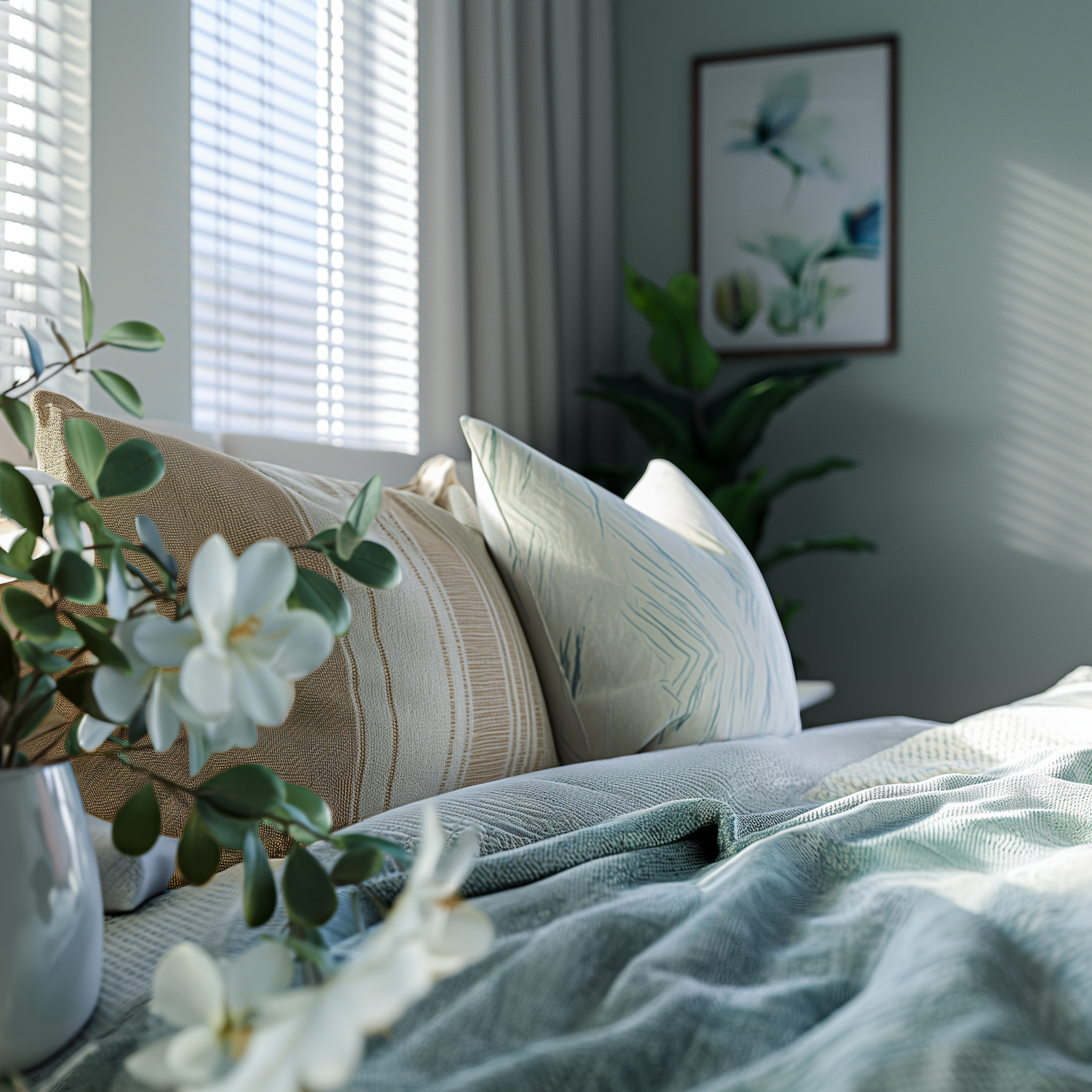
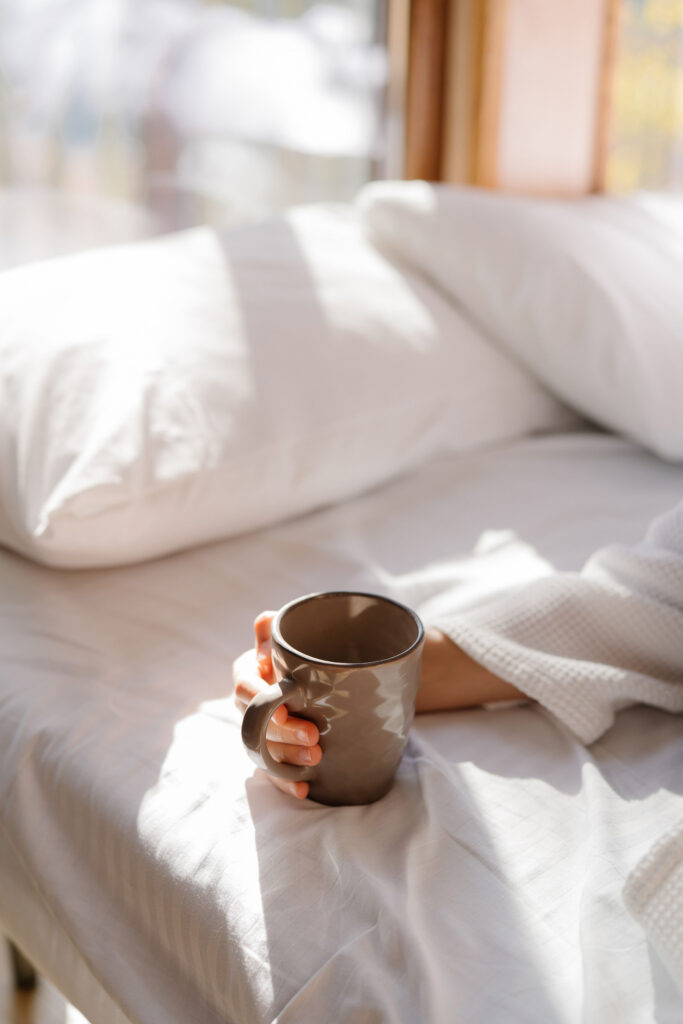
Morning light is the most important light of the day. Bright, blue-spectrum light in the first hour after waking is what anchors your circadian clock — telling your body definitively that the day has begun. When you get strong morning light exposure, cortisol rises appropriately, melatonin clears, and your body temperature begins climbing. You feel awake because your biology has been given clear, accurate information.
When you don’t get that all important morning light — when you wake to a dark house, pull the blinds against the morning glare, or commute before getting any real daylight — that anchor doesn’t set. The result is grogginess that drags into mid-morning, a mood that never quite lifts, and a sleep cycle that drifts later and later over time.
Here’s what morning light should look like in a well-designed home:
- Bedroom windows oriented east or southeast, with window treatments that allow morning light to enter (sheer panels, solar shades, or the option to open blackout curtains easily)
- A kitchen or breakfast area with access to natural light — not just a light fixture overhead
- No dark, heavy window treatments in spaces where you start your morning routine
- If your home gets minimal natural morning light: a bright (10,000 lux) light therapy lamp used during breakfast or coffee
The goal isn’t to flood your bedroom with light the moment you wake — that can be jarring to the nervous system. It’s to move into bright natural light within 30–60 minutes of rising, and to make your home’s design easy for that to happen.

The Afternoon Light Problem
Afternoon light is where a lot of homes unintentionally create problems — particularly in home offices, living rooms, and any space used for focused work.
West-facing windows that were a beautiful selling point in October can become a glare problem in March and April. Direct afternoon sun pours across computer screens, creates uncomfortable heat pockets near seating areas, and — if it continues into early evening — can delay your natural melatonin rise and push your sleep window later than intended.
At the same time, afternoon light is genuinely valuable. It supports alertness and mood during the hours when cognitive performance often dips naturally. The issue isn’t the light — it’s unmanaged, unfiltered, undirected light.
Thoughtful afternoon lighting design looks like:
- Adjustable window treatments in west-facing rooms — solar shades that cut glare without blocking daylight entirely are particularly effective
- Furniture placement that works with afternoon sun rather than against it (seating that doesn’t face into direct western glare)
- Sheer panels that diffuse harsh afternoon light into something softer and more usable
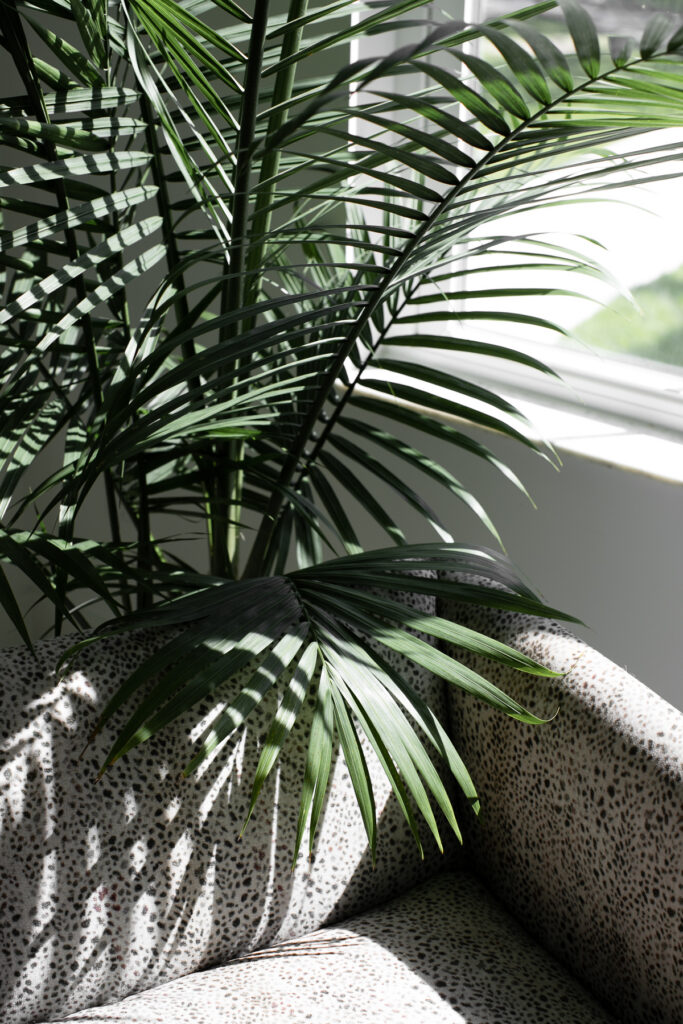
- Interior landscaping — taller plants near windows can act as natural light filters in south- and west-facing rooms
The goal is to stay in genuine light exposure through the afternoon while managing the intensity and direction so it’s working for you, not against you.
Evening Lighting — Where Most Homes Get It Most Wrong
Evening is where the most consequential lighting mistakes happen and where the most immediate improvements are possible.
Your body begins producing melatonin approximately two hours before your natural sleep time. That process depends on low, warm-toned light. But in most homes, the evening hours look like this: overhead lights blazing at full brightness, blue-rich LED bulbs in every fixture, screens at maximum brightness in dim rooms, and kitchen lights designed for task performance rather than nervous system wind-down. (And let’s be honest – entirely too much screen time because our phones are infinitely entertaining).
The result is a nervous system that receives the biological signal for midday at 9pm at night. Your melatonin is suppressed. Sleep onset is delayed and your sleep quality suffers. You wake unrefreshed even when you’ve technically gotten enough hours — because the quality of sleep was compromised by light exposure in the hours before bed.
Evening lighting in a home that supports your biology looks like:
- Layered, low-level lighting from lamps and sconces rather than overhead fixtures as the primary source after 7pm
- Warm-toned bulbs throughout the home — look for 2700K or lower (the lower the Kelvin, the warmer and more amber the light)
- Dimmers on overhead fixtures in living spaces, dining rooms, and kitchens so you can reduce intensity in the evening hours
- No blue-white LED strips or bright task lighting in bathrooms used before bed — swap for a warm nightlight or a dimmed vanity bulb
- Screen usage ideally reduced or shifted to night mode after 8pm — but even more impactful is the ambient room lighting around the screen
One of the highest-return changes most homeowners can make: replace the overhead light habit with a lamp habit. In the evenings, even if you have to walk across the room to turn on a lamp and turn off an overhead light – please do it. Your sleep quality will thank you.
Practical Changes You Can Make Today
You don’t need a full renovation to begin designing for your circadian rhythm. This is one of those rare areas where beautiful design and better daily living really can go hand in hand. Here are the highest-impact, lowest-effort changes to start with:
- Audit your bulbs. Replace any blue-white (5000K+) bulbs in bedrooms, bathrooms, and living spaces with warm white (2700K or lower). This single change can make a surprisingly noticeable difference in how your home feels at night.
- Open your morning windows. Make it a practice — not just when it’s convenient. Pull back the curtains within 30 minutes of waking, even in winter.
- Add a dimmer. If you have one overhead light fixture you use every evening, installing a dimmer is a $20–$40 fix that will change how you feel by 9pm.
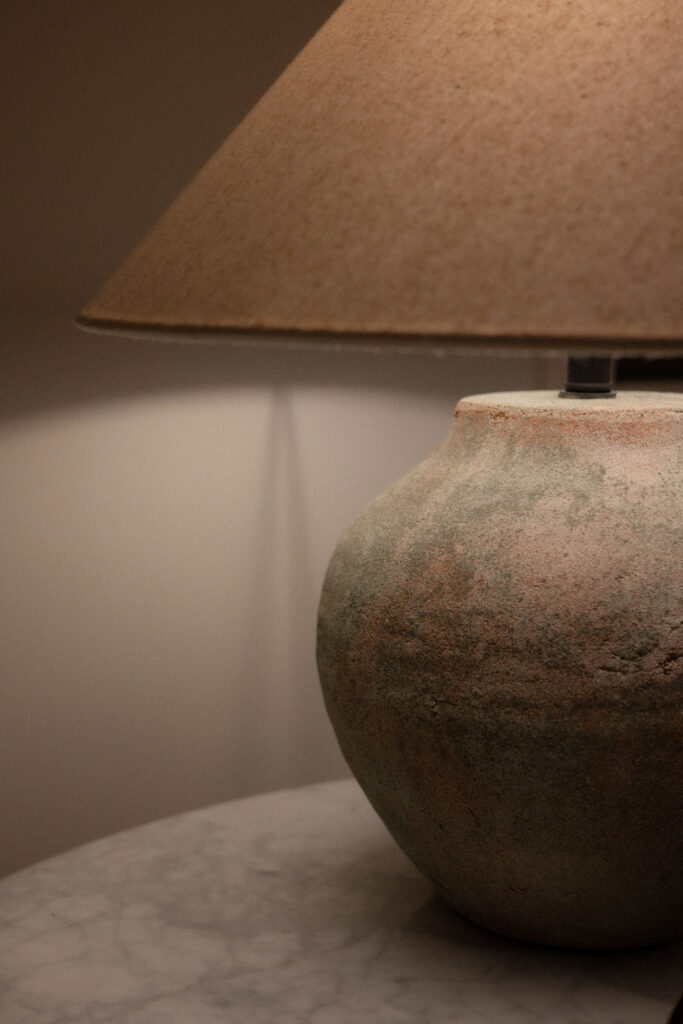
- Move a lamp into your most-used evening space. Wherever you wind down — the living room, the bedroom reading chair, the kitchen table — add a lamp with a warm bulb and use it instead of the overhead light after dinner.
- Block morning light in the bedroom strategically. Blackout curtains are valuable for protecting sleep — but pair them with the habit of opening them immediately upon waking, not gradually throughout the morning.
- Introduce natural light wherever possible. Trim back outdoor plantings that block windows. Clean your windows (this genuinely makes a measurable difference). Consider sheer panels instead of solid drapes in rooms that feel dim.
Download the 30-Minute Home Reset Guide for a room-by-room checklist that includes lighting as part of a full seasonal reset — it’s a great companion to everything in this post!
When Design Makes the Difference (Professional Lighting Assessment)
DIY lighting changes can take you a significant part of the way. But there are situations where the structure of your home — window placement, room orientation, fixture types, architectural constraints — requires a more comprehensive solution.
If you’ve made the practical changes and still find your home feels dim in the morning, overstimulating in the evening, or generally unable to support the light rhythms your body needs, it may be time for a professional lighting assessment.
At The Intentional Design Studio, circadian-informed lighting design is part of every project. I look at how light moves through your space across the day and seasons — not just how it looks in a single moment — and design layered lighting plans that support your nervous system as an integrated part of the overall design.
Whether you’re building new, renovating, or simply frustrated that your beautiful home never quite feels right, a Healthy Home Consultation is the place to start. We’ll look at your space through the lens of light, wellness, and how your home is actually functioning for your body — and build a clear picture of what to change.
Light Is Design. Design Is Health.
The light in your home is not a neutral backdrop. It is actively participating in your biology — every morning, every afternoon, every evening. Whether it’s supporting your sleep, mood, and energy or quietly undermining them is largely a matter of design.
The good news is that lighting is one of the most flexible, changeable parts of a home. Unlike layout or square footage, it can be shifted, layered, softened, and improved without starting from scratch. And when it’s done thoughtfully, the difference shows up in your sleep quality, mood and daily energy.
→ Download the free 30-Minute Home Reset Guide for a practical, room-by-room starting point — including lighting considerations for every space.
→ Ready to take your home’s wellness design further? Book a complimentary Intro Call and let’s talk about what circadian-informed lighting design could look like in your specific space.
Because a home that supports your health isn’t an accident. It’s the result of intentional design.


homes