There’s a disconnect in the smart home conversation that’s been bothering me for years.
Most smart home technology is marketed on convenience – lights you can turn off from bed, thermostats you can adjust from your phone, refrigerators that show you what’s inside without opening the door. And sure, convenience matters. But as a wellness-focused interior designer, I’m far more interested in a different question:
Which smart home devices actually support how you feel and function in your home?
Your home environment profoundly impacts your sleep quality, your stress levels, your ability to focus, and your overall wellbeing. The air you breathe influences your energy and mental clarity. The light around you affects your sleep and hormone cycles. Your sensory landscape impacts your stress levels and nervous system regulation.
And yet, the mainstream smart-home conversation rarely acknowledges these connections.
We hear about features. We rarely hear about effects.
I’ve spent years translating research from building science, circadian biology, neuroaesthetics, and environmental psychology into practical design strategies for families, professionals, and wellness-oriented homeowners. What I’ve learned is simple:
The smartest homes aren’t the ones with the most gadgets – they’re the ones that support the body’s natural rhythms.
The technologies worth paying attention to in 2026 aren’t necessarily the newest or flashiest. They’re the ones that make your home healthier, calmer, and more attuned to your daily life and biological needs.
This conversation is gaining traction well beyond my own design practice. I was recently featured in The Spruce discussing the smart appliance trends shaping more functional homes in 2026 – a piece that focuses on how technology can support real life, not just convenience for convenience’s sake.
If you’d like a snapshot of where the broader conversation is heading, you can read the article here:
Smart Appliance Trends That Will Make Your Home Functional in 2026 (The Spruce)
In this post, I’m taking that conversation further, exploring the why behind these smart home wellness trends for 2026 and how smart technology, when designed intentionally, can support wellness, nervous-system regulation, and everyday ease at home.
Circadian Lighting Systems: The Most Undervalued Wellness Technology in the Home
If I could change one thing about how we talk about lighting, it would be this:
Lighting is biological first and decorative second.
In every project I design, I see how deeply light influences how people feel in their homes – their energy, their mood, their sleep, their stress levels. Light is the primary external signal that synchronizes your circadian rhythm, which governs everything from hormone regulation to digestion to cognitive performance.
Why Circadian Lighting Matters for Wellness
What it is: Smart lighting that automatically adjusts color temperature throughout the day to mirror natural daylight patterns.
When lighting is misaligned, your body is misaligned.
Bright, cool light in the morning communicates “wake up.” Warm, amber light in the evening communicates “wind down.” But many homes remain locked at a single color temperature all day – an unnatural condition that keeps your brain in a confused, semi-alert limbo. The result?
Difficulty falling asleep. Morning grogginess. Afternoon slumps. Mood fluctuations. Disrupted cortisol and melatonin cycles.
Circadian lighting systems recreate the natural arc of daylight indoors. They transition from cooler, energizing light to warmer, melatonin-friendly tones automatically, gently cuing your body to follow its natural rhythm.
These gradual, automated transitions also reduce sensory shock – particularly beneficial for people with sensory processing sensitivities, but honestly appreciated by everyone. No more harsh overhead lights suddenly flipping on in the morning or jarring bright light when you’re winding down for bed.
Over time, this can improve:
- sleep quality
- morning wakefulness
- daytime cognitive performance
- emotional regulation
- stress recovery
For my clients who work from home or struggle with sleep, this is the single most impactful smart home upgrade I recommend.

Circadian Lighting Systems:
Philips Hue: (White Ambiance bulbs – affordable way to start in your bedroom and home office)
Lutron Ketra (Whole-Home System)
How to implement: Start small. Put circadian bulbs in your bedroom and primary workspace first. Set them to shift warmer starting two hours before your target bedtime. Your sleep will thank you!
Air Quality Monitoring + Smart Purification: The Wellness Tech Combo You Need
Here’s a stat that usually surprises people: indoor air can be 2-5 times more polluted than outdoor air, according to the EPA. VOCs from furniture off-gassing, particulate matter from cooking, CO2 buildup from poor ventilation, excess humidity creating mold conditions – it all adds up, and most of us have no idea what we’re breathing.
Why IAQ Matters for Your Health
Common indoor pollutants can influence:
- headaches
- fatigue
- concentration
- allergies and asthma
- respiratory strain
- long-term health risks
But here’s the key: most of these pollutants are invisible. You don’t smell rising CO₂ levels. You won’t feel PM2.5 accumulating in the air. And you won’t sense VOCs off-gassing from new furnishings.
This is where smart air quality monitors become genuinely essential, not just “nice to have.”
What to monitor:
- PM2.5 (fine particulate matter from cooking, candles, outdoor pollution)
- VOCs (volatile organic compounds from cleaning products, furniture, paint)
- CO2 levels (indicates ventilation quality; high CO2 = brain fog and fatigue)
- Humidity (too high = mold risk; too low = respiratory irritation)
Why this matters: You can’t improve what you can’t measure! Smart monitors give you real data about what’s actually happening in your home’s air, and when integrated with smart purifiers, they can automatically respond when levels spike.
Air Purifiers:
uHoo Smart Air Quality Monitor
The integration play: Set your air quality monitor to trigger your purifier automatically when VOCs or PM2.5 spike. Open windows in the morning when outdoor air quality is good. Get alerts when CO2 levels suggest you need ventilation. This is where technology genuinely supports wellness rather than just reporting it.
Smart Thermostats: Where Comfort, Biology, and Technology Align
Most people buy smart thermostats to save money on their energy bills. That’s fine. But the wellness benefit here is actually sleep optimization – and it’s significant.
Here’s why: Temperature is another form of environmental information – one your body relies on to regulate its sleep-wake cycle, energy levels, and hormonal rhythms.
The sleep-temperature connection:
Your body temperature naturally drops as you fall asleep and reaches its lowest point in the early morning hours. This isn’t random—it’s a critical part of your circadian rhythm. Maintaining a bedroom temperature between 60-67°F supports this natural temperature decline and promotes deeper, more restorative sleep.
But when your bedroom is too warm, your body struggles to reach this necessary temperature drop, leading to:
- Difficulty falling asleep
- Lighter, more fragmented sleep
- Nighttime waking
- Reduced REM and deep sleep stages
Too cool (below 60°F), and your body works too hard to maintain core temperature, which is also disruptive.
Smart thermostats can automatically adjust for this without you thinking about it.
But it goes deeper than sleep: Modern smart thermostats also manage humidity levels (optimal range: 30-50% for comfort and health), send alerts when your air filter needs changing (major for air quality), and integrate seamlessly with other wellness routines.
For example: your circadian lighting shifts to warm tones at 8 PM, triggering your thermostat to begin cooling your bedroom to 67°F. By the time you’re ready for bed at 10 PM, the temperature is perfect for sleep. No manual adjustment needed.
Beyond sleep optimization, smart thermostats support:
Better humidity control (critical for respiratory health and preventing mold) Timely filtration alerts (keeps your air quality high) Balanced comfort distribution room-to-room (no more fighting over the thermostat) Personalization for different family members’ schedules and preferences
Thermostats:
Ecobee SmartThermostat Premium
Google Nest Learning Thermostat
Pro tip: Use the geofencing feature to start adjusting temperatures 30 minutes before you arrive home, so your space is already optimized when you walk in the door.
Smart Kitchens: Reducing Cognitive Load Through Technology
Here’s the reality: decision fatigue is real, and it’s exhausting. Modern life comes with immense mental load: schedules, meal planning, grocery lists, cooking timelines, cleanup routines, remembering what needs to be defrosted or what’s about to expire. Each micro-decision drains a little more cognitive energy – energy you’d rather spend on your family, your work, or your own wellbeing.
Smart kitchen technology isn’t about impressing your guests with gadgets. It’s about reducing the invisible burden of running a household.
The wellness connection: When your kitchen systems automate repetitive tasks and remove friction from daily routines, you’re not just saving time—you’re preserving mental energy and reducing the constant background stress of “what do I need to remember next?”
This is particularly valuable for people with ADHD or executive function variations, but the truth is: everyone’s executive function is limited. We all have a finite capacity for decisions, task-switching, and working memory. Smart kitchen tech that reduces these demands benefits anyone managing a busy household.
A calmer kitchen → a calmer nervous system → a household that functions better.
Where Smart Kitchen Tech Actually Helps
Let me paint you a picture: It’s 5:30 PM on a Tuesday. You’re 15 minutes from home. Your smart oven is already preheating to 400°F because it sensed your location. The dishwasher ran at 2 AM during off-peak energy hours, so it’s clean and ready to unload. Your smart fridge sent you a notification this morning that the milk expires today, so you grabbed a fresh carton on your way home. You walk in the door with one less thing on your mental to-do list – and that matters.
So what makes kitchen tech genuinely helpful?
Smart kitchen tech:
Pre-heating and remote control ovens: Instead of arriving home exhausted and waiting 15 minutes for the oven to heat up while hungry kids circle, your oven is ready when you walk in the door. Dinner happens faster, stress decreases.
Smart dishwashers with optimal timing: Schedule them to run during off-peak energy hours (usually overnight or mid-afternoon), so they’re clean and ready when you need them. No more “did someone run the dishwasher?” conversations.
Smart faucets with measured dispensing: Need exactly 4 cups of water for that recipe? Voice command or touchless dispensing eliminates the measuring cup step. Small convenience, but it adds up when you’re cooking frequently.
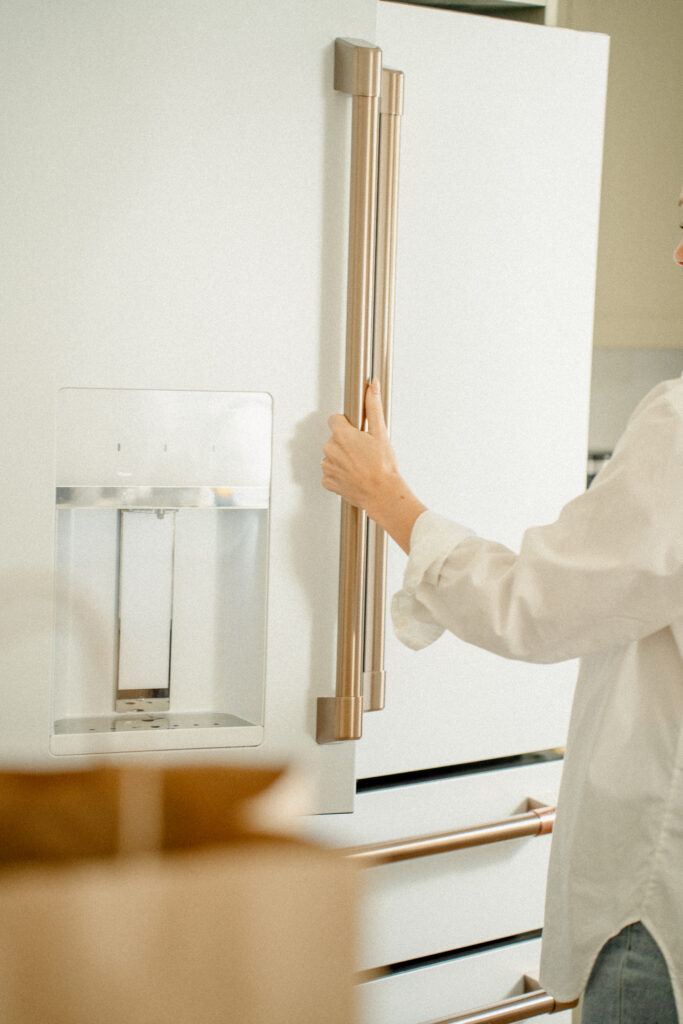
Food management systems (the useful kind): Not talking about smart fridges with giant touchscreens—those are unnecessary. But inventory tracking that alerts you before food expires or when you’re running low on staples? That genuinely reduces food waste and mental load around meal planning.
Voice-controlled timers and task management: Hands covered in flour? Just say “set a timer for 12 minutes” without stopping to wash your hands or find your phone. Multiple timers running for a complex meal? Label them by voice. This is executive function support in action.
Smart Kitchen Products:
Bosch 800 Series Smart Dishwasher
If you’re just beginning to add smart kitchen tech, start with the thing that causes you the most friction in your daily routine.
Dinner prep timing stresses you out → Smart oven with remote preheat
You’re constantly running out of things or wasting food → Inventory tracking system
If you’re juggling multiple cooking tasks → Voice-controlled timers and task management
Cleanup feels overwhelming → Smart dishwasher with optimized scheduling
Start with one device, learn how it fits into your routine, then expand if it genuinely makes your life easier. The goal isn’t a fully automated kitchen – it’s a kitchen that supports you rather than draining you.
A personal note: I started using this incredible meal planning subscription from Restaurant Dropout by Zoe Barrie Soderstrom and it was without a doubt my favorite Lazy Genius hack of 2025. You can check the subscription out here. If you’d like to try it out, send me an email and I’d be happy to share one of the complimentary one month subscriptions I was gifted with.
The Case for Hidden Tech: Why “Digital Minimalist Design” Supports Calm Spaces
Here’s where I diverge from a lot of tech enthusiasts: I believe the best smart home technology is technology you don’t constantly see.
From a neuroaesthetic perspective, visual clutter affects your mental state. Every visible device, blinking light, charging cable, and screen is a micro-stressor pulling at your attention. Your brain is constantly processing all of it, even subconsciously.
This effect is amplified for people with sensory processing differences, but it impacts everyone. We all have cognitive bandwidth limits, and visual noise consumes that bandwidth whether we realize it or not.
This is why I’m far more excited about integrated and hidden smart home solutions than flashy statement pieces.
What this looks like in practice:
- Art-panel TVs (Samsung Frame, LG Gallery series) that disappear into your wall art when not in use
- Fabric-wrapped speakers (Sonos Era 100, B&O Beosound) that blend into your decor rather than screaming “tech”
- Hidden charging zones built into furniture, eliminating visible cable clutter
- Under-cabinet sensors and recessed smart switches that respond to presence without visible controls
- Voice-optional systems that don’t require always-on microphones (privacy + peace of mind)
The goal: Technology that serves you quietly, without dominating the visual or mental landscape of your home.
Does your tech reduce friction in your life, or create more decision fatigue and visual noise? That’s the filter I use when evaluating what stays and what goes.
What I Skip (And Why)
Not all smart home tech is created equal. Here’s what I typically don’t recommend to wellness-focused clients:
Smart refrigerators with screens: Expensive, unnecessary, and a solution looking for a problem. A simple whiteboard or your phone’s notes app works better for grocery lists.
Voice assistants in bedrooms: Always-on microphones create both privacy concerns and the temptation to engage with devices right before sleep. Not worth it.
Over-automated lighting: If you have to check an app to turn on a light switch, you’ve gone too far. Smart lighting should enhance intuitive control, not replace it.
Gadgets that create more work: If a device requires constant updates, subscriptions, or fussy maintenance, it’s adding stress rather than removing it.
My criteria for what’s worth it:
- Does it support health? (sleep, air quality, nervous system regulation)
- Does it reduce friction? (genuinely easier, not just “cool”)
- Does it integrate beautifully? (enhances your space rather than cluttering it)
If a device doesn’t clearly check at least two of these boxes, I skip it.
The Bottom Line: Wellness-First Smart Homes
Here’s what I want you to take away from this: smart home technology can be genuinely supportive of your health and wellbeing—but only if you’re intentional about what you bring into your space.
Circadian lighting that supports your sleep cycle? Absolutely worth it.
Air quality monitoring that protects your respiratory health? Essential, especially if you have children or allergies.
Thermostats that optimize for comfort and rest? A game-changer.
Hidden tech that reduces visual clutter and mental load? Aligned with how our nervous systems actually work.
But smart fridges that talk to you? Bluetooth toothbrushes? WiFi-enabled coffee makers? That’s not wellness. That’s noise.
A note on universal design:
You may have noticed that many of these recommendations particularly support neurodivergent individuals – gradual lighting transitions, reduced decision points, predictable automated routines, minimal visual clutter. That’s intentional. When we design for people with sensory processing differences or executive function variations, we create spaces that work better for everyone. Universal design isn’t a separate consideration – it’s good design, period.
As you think about your own home, I encourage you to ask the same questions I ask my design clients: What do you actually need to feel better in your space? What would genuinely reduce stress and support how your body works?
Start there. The tech is just a tool.
Disclaimer: Product recommendations are based on widely available information and wellness design best practices. I have not personally used every product listed; always confirm compatibility with your home, lifestyle, and needs before purchasing.
Ready to create a healthier, more intentional home?
If you’re thinking about how smart technology could support your family’s wellness (or wondering which upgrades are actually worth the investment), I’d love to help you think through it.
Join my email list for more wellness-focused design insights →
And if you’d like to learn more about how your space affects your wellbeing, check out my post on how spaces influence stress and relaxation here.
Curious about working with us?
Our complimentary discovery call is the first step – no pressure, no decisions – just a chance to share more about your project and see if we’re the right fit. Click here to inquire and take the first step toward a beautifully intentional home.
📍 Proudly serving Athens, Georgia, Oconee County, and surrounding communities throughout Northeast Georgia and beyond.
💌 Book a complimentary call with us to discuss your project!
Catherine Shuman is an interior designer and founder of The Intentional Design Studio, specializing in wellness-centered designed. She combines neuroscience-backed design principles with non-toxic materials to create spaces that support nervous system regulation and overall wellbeing.


homes